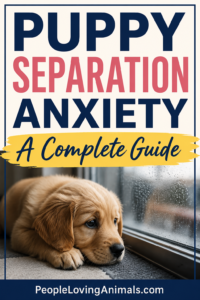
Puppy separation anxiety can lead to destructive behavior, nonstop barking, whining, accidents in the house, and emotional stress for both puppies and their owners. The good news is that with patience, consistency, and the right puppy separation anxiety solutions, most puppies can learn to feel safe and confident when left alone.
In this post, you’ll learn about common puppy separation anxiety symptoms and signs, how to deal with puppy separation anxiety, crate training for separation anxiety, training for puppy separation anxiety, and practical puppy separation anxiety tips that can help your puppy become calmer and more independent over time.
Affiliate Disclosure: This post contains affiliate links. If you make a purchase, I’ll earn a commission (at no extra cost to you). I donate 10% of my profits to animal charities.
What Are the Signs of Puppy Separation Anxiety?
Puppy separation anxiety symptoms can appear in many different ways, and some signs are more obvious than others. Many puppies become distressed almost immediately after their owner leaves the house or even leaves the room.
Common puppy separation anxiety signs include:
- Whining, crying, or barking excessively when left alone
- Chewing furniture, doors, shoes, or household items
- Scratching at doors or windows
- Pacing or restlessness
- Accidents in the house despite being house trained
- Refusing to eat when alone
- Following you constantly from room to room
Some puppies simply haven’t yet learned that being alone is safe and temporary. Others may become anxious due to sudden schedule changes, lack of confidence, limited independence training, or past stressful experiences.
If you think your puppy is struggling with separation anxiety, you may also want to read my post, Signs Your Pet May Have Separation Anxiety
According to the American Veterinary Medical Association, separation anxiety is a common behavioral issue in dogs and can worsen if not addressed early.
How to Deal With Puppy Separation Anxiety Successfully: Puppy Separation Anxiety Solutions
One of the most important things to understand about how to help puppy separation anxiety is that progress usually happens gradually. Puppies need to learn that alone time is normal, safe, and temporary.
Start by practicing very short absences. Leave the room for just a minute or two, then calmly return before your puppy becomes highly distressed. Gradually increase the amount of time your puppy spends alone.
It’s also important to avoid making departures and arrivals overly emotional. Keeping greetings calm and relaxed can help reduce anxiety around your comings and goings. What I mean is, when you leave for work, don’t make a big deal about it. No big farewells! And when you return home, don’t immediately start acting excited with them.
The point is – make your coming and going no big deal.
Helpful puppy separation anxiety tips include:
- Providing daily physical exercise and mental stimulation
- Using food puzzles or safe chew toys during alone time
- Creating a predictable routine (routine is enormously comforting for puppies)
- Practicing independence while you are home (short practices with you out of the room)
- Avoiding punishment for anxiety-related behaviors. Seriously. That will only make things worse and it’ll also damage your relationship with your puppy.
Many puppy owners accidentally reinforce clingy behavior by constantly interacting with the puppy throughout the day. Teaching healthy independence is an important part of training for puppy separation anxiety.
Does Crate Training Help Puppy Separation Anxiety?
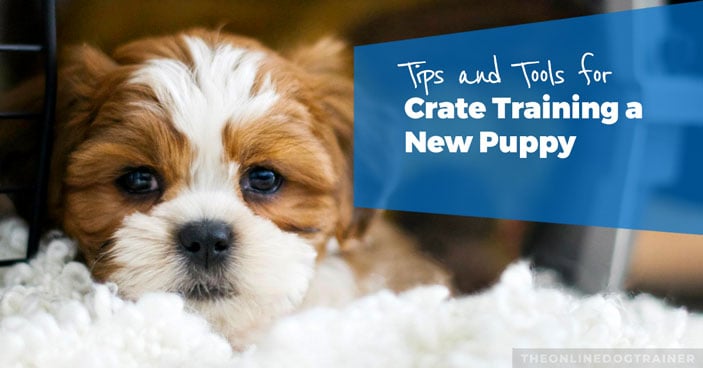
Crate training for separation anxiety can be helpful for some puppies, but only if the crate is introduced properly and associated with comfort and safety. A crate should never feel like punishment.
A puppy separation anxiety crate setup should include soft bedding, safe chew toys, and a calm environment. Many puppies feel more secure in a properly introduced crate because it creates a predictable personal space.
However, forcing an anxious puppy into a crate too quickly can actually increase stress and panic behaviors. Crate training should happen gradually and positively.
Helpful crate training strategies include:
- Feeding meals inside the crate
- Leaving the crate door open initially
- Using treats and praise for calm crate behavior
- Starting with short crate sessions
- Never using the crate as punishment
If your puppy becomes extremely distressed in the crate, you may need to slow down the training process or consider other puppy separation anxiety solutions while continuing gradual crate conditioning.
You may also want to read my post, Crate Training for Separation Anxiety for clear instructions on how to do crate training properly. It’s important to do proper training before just leaving your puppy in a crate. That post will help (includes video).
What Causes Puppy Separation Anxiety?
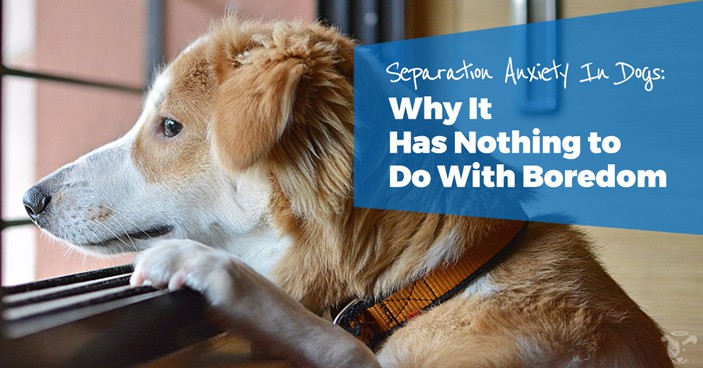
Professional Dog Trainer, Doggy Dan, has an interesting tutorial on his website called, Dog Separation Anxiety: Why It Has Nothing to Do With Boredom. Definitely check that out to learn more about the real causes of puppy separation anxiety.
Training for Puppy Separation Anxiety
The best puppy separation anxiety training focuses on building confidence, independence, and calm behavior gradually over time. Consistency is extremely important.
Many puppy owners find that structured training programs can help them understand exactly how to respond to anxious behaviors and how to build confidence in a step-by-step way.
I can recommend an effective, easy-to-use training program created by Professional Dog Trainer, Doggy Dan, called The Dog Calming Code. You can read about it in my post, Training for Puppy Separation Anxiety.
You might also want to check out his more advanced training program for separation anxiety here.
Remember that severe separation anxiety may require a combination of training, environmental changes, exercise, mental stimulation, and guidance from a professional trainer or veterinarian.
Puppy Separation Anxiety FAQ
Will my puppy outgrow separation anxiety?
Some puppies improve naturally with maturity, but many need consistent training and independence-building exercises to fully overcome separation anxiety.
How long does puppy separation anxiety last?
Every puppy is different. Mild cases may improve within weeks, while more severe anxiety can take several months of consistent training.
Should I ignore my puppy crying in the crate?
Brief whining may be normal, but intense panic, nonstop barking, or severe distress should not be ignored. Gradual crate training is important.
Can crate training make separation anxiety worse?
If introduced too quickly or used improperly, a crate can increase anxiety. Positive, gradual crate training is the safest approach.
What is the best way to help a puppy with separation anxiety?
Short practice absences, confidence-building exercises, exercise, routines, mental stimulation, and positive reinforcement are often very effective.
Puppy Separation Anxiety Solutions That Can Help Your Puppy Feel Safe and Calm
Puppy separation anxiety can feel overwhelming at first, but many puppies improve significantly with patience, consistency, and proper training. The earlier you begin working on independence and confidence-building, the easier it often is to prevent long-term anxiety behaviors from developing.
One final note: Try to remember that your puppy is not being “bad” — they are feeling anxious and insecure and possibly even afraid. With the right approach, many puppies learn to feel calm, safe, and confident even when home alone.
But it’s up to you as the puppy’s owner to train the puppy correctly. Some puppy owners have it easy and the puppy does just fine being alone. But other puppies need more guidance and help and if you have one of those puppies – guess what – it’s up to you as their owner to take the time to get them through it. Your puppy needs you!
For more help with your puppy’s behavior in general, read my Complete Puppy Training Guide.
💬 Did this help you? If you have a question, helpful tips, or even a struggle related to this topic, please leave a comment below — it helps other readers more than you know.
Pin It For Later!