
Most puppies stop biting between 6 and 12 months of age. However, there isn’t one exact age when all puppies suddenly stop biting. Like many aspects of puppy development, the timeline varies depending on the individual puppy, their breed, their personality, and how quickly they mature.
If you’re raising a puppy, you’ve probably found yourself asking, “When is this biting going to stop?” Between the nipping, chewing, and biting your hands, feet and clothing, it can sometimes feel like your puppy is determined to bite everything in sight. The good news is that this stage doesn’t last forever.
Understanding what to expect during the first year can help you recognize normal progress and avoid worrying that your puppy’s behavior will last forever. By the end of this post, you’ll realize there’s light at the end of the tunnel!
Affiliate Disclosure: This post contains affiliate links. If you make a purchase, I’ll earn a commission (at no extra cost to you). As an Amazon Associate, I earn from qualifying purchases. I donate 10% of my profits to animal charities.
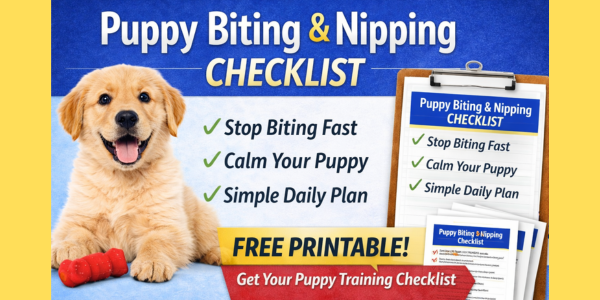
Need help fast? Grab my free puppy biting & nipping checklist:
There Isn’t One Exact Age When Puppies Stop Biting
One of the biggest misconceptions among new puppy owners is that puppies reach a certain age and suddenly stop biting. Unfortunately, it doesn’t work that way.
Most puppies gradually outgrow excessive biting as they mature. You may notice that the biting becomes less frequent, less intense, and easier to redirect over time. Instead of one dramatic change, improvement usually happens gradually.
One week your puppy may stop biting your hands as often. A few weeks later they may lose interest in chewing your shoes. A month after that they may begin settling down more quickly after play sessions.
The process is gradual, but it does happen. (I promise!)
What to Expect Between 8 and 12 Weeks
Most puppies arrive in their new homes at around 8 weeks of age. At this stage, biting is often at its peak.
Young puppies are energetic, curious, and constantly interacting with the world around them. They haven’t yet developed much impulse control, and they tend to become excited very easily. As a result, many owners experience frequent nipping during play, chewing on clothing, and constant attempts to grab hands and fingers.
While this stage can be frustrating, it’s important to remember that this behavior is extremely common in young puppies. In most cases, it is simply part of normal development.
What to Expect Between 3 and 4 Months
Many puppy owners are surprised to discover that biting sometimes becomes more noticeable between 3 and 4 months of age.
At this stage, puppies are becoming more confident and active. They often have more energy than they did when they first arrived at your home, which can make them seem even more mouthy.
This period can be discouraging because many owners expect to see improvement by now. Instead, they sometimes feel like their puppy is moving backward.
Fortunately, this stage is usually temporary. Consistent training and patience are especially important during this period. I’ll give you some resources for effective puppy training toward the end of this post.
What to Expect Between 4 and 6 Months
The months between 4 and 6 months are often the most challenging because this is when many puppies are finishing the teething process.
You may notice increased chewing during this stage. Puppies often become particularly interested in furniture, blankets, toys, and household objects. Some puppies also become more mouthy with family members while their adult teeth are coming in.
The encouraging news is that many owners begin noticing significant improvement once teething is complete. As puppies become more comfortable and mature, the constant need to chew often begins to decrease.
Most Puppy Biting Improves Significantly By 6 Months
By around 6 months of age, many puppies start showing noticeable progress.
Their adult teeth are developing, they have gained more experience interacting with people, and they are beginning to develop better self-control. While occasional nipping may still occur during exciting moments, the constant puppy biting that was common (and driving you nuts!) during the first few months often starts becoming less frequent.
Some Puppies Continue Biting Until 12 Months
Although many puppies improve by 6 months of age, some continue to struggle with biting and mouthing behaviors well into adolescence.
Larger breeds and high-energy breeds often mature more slowly than smaller dogs. Some puppies simply take longer to develop impulse control and good manners.
For these dogs, improvement may continue gradually throughout the first year of life. This doesn’t necessarily mean there’s a problem. It may simply mean your puppy needs a little more time to mature.
Signs Your Puppy is Outgrowing the Biting Phase
Even before the biting disappears completely, you’ll often notice signs that your puppy is making progress. For example, your puppy may begin choosing toys instead of your hands. They may calm down more quickly after play sessions or become easier to redirect when they get excited.
Many owners also notice that their puppy’s biting becomes gentler and less frequent. These small improvements are often the first signs that your puppy is maturing and developing better self-control.
When Should You Be Concerned About Your Puppy’s Biting?
Most puppy biting is simply a normal stage of development. However, there are situations where additional guidance may be helpful.
If your puppy frequently growls, guards food or toys, bites out of fear, or causes serious injuries, consider consulting your veterinarian or a qualified dog trainer. These behaviors may require additional attention beyond normal puppy training. Check out my post, 7 Ways to Stop Aggressive Puppy Biting for more help.
Fortunately, these situations are much less common than ordinary puppy biting. For more information, read this article, Puppy Biting: When to See the Vet.

The Good News: The Puppy Biting Stage Doesn’t Last Forever
If you’re currently dealing with a puppy that seems determined to chew on everything in sight, take heart. Almost every puppy owner experiences this stage. It’s kind of like when human parents struggle with their toddler’s “terrible two’s.” It happens. It’s normal. You deal with it. It eventually stops.
While the exact timeline varies, most puppies show significant improvement between 6 and 12 months of age. As they mature, gain self-control, and continue learning appropriate behavior, the biting gradually becomes less frequent and less intense.
If you’re looking for practical training techniques to help speed up the process, be sure to read my complete guide, How to Stop My Puppy from Biting. In that post, I reveal the biggest mistake puppy owners make when trying to teach their puppy to stop biting!
Training for Puppy Biting
I’ve been recommending Professional Dog Trainer, Doggy Dan’s puppy training programs for more than 10 years. You can check out his Puppy Coach Program here. He’s also come out with a new program specifically for puppy biting, nipping and chewing. You can check it out here, or read my full review here.
Doggy Dan’s training techniques are easy-to-follow, kind and effective. Also check out my Complete Puppy Training Guide to address more common puppy behavior issues.
More Help with Puppy Biting and Nipping
- How to Stop My Puppy from Biting: Biggest Mistake You're Making
- How to Stop a Puppy from Nipping
- 7 Ways to Stop Aggressive Puppy Biting
- At What Age Do Puppies Stop Biting?
- Why Do Puppies Bite?
- Why Does My Puppy Bite My Hands and Feet?
Pin it for Later!