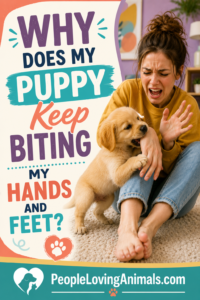
Many new puppy owners become frustrated when their puppy seems more interested in biting hands and feet than playing with toys. Fortunately, this behavior is usually just a normal part of puppy development. In most cases, puppies target hands and feet because they’re playful, excited, curious, or responding to movement.
In fact, “why does my puppy bite my hands and feet?” is one of the most common questions new puppy owners ask.
Understanding why your puppy bites your hands and feet can help you respond appropriately and encourage better behavior as your puppy matures.
Affiliate Disclosure: This post contains affiliate links. If you make a purchase, I’ll earn a commission (at no extra cost to you). As an Amazon Associate, I earn from qualifying purchases. I donate 10% of my profits to animal charities.
Need help fast? Grab my free puppy biting checklist:
Why Puppies Target Hands and Feet
From your puppy’s perspective, hands and feet are fascinating. They’re constantly moving and often become part of games, play sessions, and everyday interactions with you.
When you reach down to pet your puppy, wave a toy, walk across the room, or wiggle your toes under a blanket, you’re creating movement that naturally attracts your puppy’s attention.
Puppies explore the world with their mouths. Unfortunately, that means your hands and feet often become part of the investigation. While the behavior can be frustrating, it’s important to remember that most puppies aren’t trying to hurt you. They’re simply interacting with their environment in the way puppies naturally do.
Why Puppies Bite Feet More Than Other Body Parts
Many puppy owners notice that their puppy seems especially interested in biting feet. The reason is simple: feet move.
Moving objects trigger a puppy’s natural instinct to chase and interact. As you walk through the house, your puppy may see your feet as exciting moving targets. This is especially common in energetic puppies and herding breeds.
Children often experience this behavior even more because they tend to run, skip, and move quickly. Fast-moving feet can be almost irresistible to an excited puppy.
If your puppy frequently chases and bites your feet while you’re walking, they’re usually reacting to the movement. From your puppy’s perspective, moving feet can seem just as exciting as a toy.
Why Puppies Bite Hands During Play
Hands often become targets because they’re involved in almost everything we do with our puppies. We pet them, play with them, hold toys, give treats, and provide affection using our hands. Because of this, puppies naturally learn to focus on them.
Sometimes puppy owners accidentally encourage the behavior without realizing it. Rough play, wrestling games, or allowing a puppy to mouth hands when they’re young can teach the puppy that hands are acceptable toys. I talk more about this in my post, How to Stop a Puppy from Biting: The Biggest Mistake You’re Making!
Many puppies don’t understand the difference between a chew toy and a hand until we consistently teach them.
Is My Puppy Being Aggressive?
This is a concern some puppy owners have when their puppy is biting. The good news is that most puppies who bite hands and feet are not being aggressive. They’re usually playing, exploring, teething, or seeking attention.
True aggression in young puppies is much less common than normal puppy biting behavior. However, if your puppy frequently growls, guards food or toys, bites out of fear, or causes serious injuries, it may be wise to consult your veterinarian or a qualified dog trainer.
If you think your puppy’s biting is aggressive, read my post, 7 Ways to Stop Aggressive Puppy Biting for help.
How to Stop a Puppy from Biting Hands and Feet
The first step is to avoid turning your hands and feet into toys. When your puppy starts biting, calmly redirect their attention to an appropriate chew toy. Consistency is important. The goal is to teach your puppy what they should bite rather than focusing only on what they shouldn’t bite.
If your puppy becomes overly excited, a short break from play can help them settle down. Many puppies become especially mouthy when they’re overtired or overstimulated.
It’s also important to make sure your puppy gets plenty of exercise, mental stimulation, and opportunities to chew appropriate items. Over time, most puppies learn that toys are much more rewarding than hands and feet.
Most Puppies Outgrow This Behavior
One of the most reassuring things for puppy owners to hear is that this stage usually doesn’t last forever. As puppies mature, finish teething, and develop better impulse control, biting hands and feet typically becomes less frequent. Many owners notice significant improvement during the first year.
Patience and consistency go a long way during this stage of puppy development.
Understanding why your puppy bites hands and feet is the first step toward teaching better behavior. With patience, consistency, and proper training, most puppies eventually outgrow this frustrating habit.
If you want professional, effective help with your puppy’s biting, I can recommend a program called, Biting, Nipping & Chewing from Professional Dog Trainer, Doggy Dan. He’ll guide you step-by-step on how to address and control your puppy’s biting. You can read my full review here.
Check out my Complete Puppy Training Guide for help with other common puppy behavior issues, or check out Doggy Dan’s full puppy training program, The Puppy Coach, if you’d like more advanced, professional help on all puppy behavior problems.
Don’t forget to grab your free puppy biting and nipping checklist!
More Help with Puppy Biting and Nipping
- How to Stop My Puppy from Biting: Biggest Mistake You're Making
- How to Stop a Puppy from Nipping
- 7 Ways to Stop Aggressive Puppy Biting
- At What Age Do Puppies Stop Biting?
- Why Do Puppies Bite?
- Why Does My Puppy Bite My Hands and Feet?
Paws.org: Puppy Nipping and Rough Play
Pin it for Later!