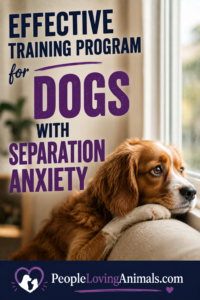
Watching a dog suffer with separation anxiety can be frustrating and heartbreaking. Dogs with separation anxiety may bark excessively, destroy furniture, pace, whine, have accidents in the house, or become extremely distressed whenever they are left alone. Fortunately, there are ways to help your dog feel more relaxed, confident, and secure when you’re away.
In this post, you’ll learn what separation anxiety is, common signs to watch for, and how Professional Dog Trainer, Doggy Dan’s training program, The Dog Calming Code, can help reduce anxiety-related behaviors by focusing on your dog’s emotional well-being.
Affiliate disclosure: This post contains affiliate links. If you make a purchase, I will earn a commission at no extra cost to you. I donate 10% of my profits to animal charities.
What Causes Separation Anxiety in Dogs?
Many dog owners assume separation anxiety is a training problem. In reality, it is often an emotional issue. Dogs with separation anxiety may become overly dependent on their owners and feel stressed or fearful when left alone.
Some dogs develop separation anxiety after a major life change, such as moving, being rehomed, a change in routine, or the loss of a family member. Others simply have anxious personalities and struggle with being separated from the people they trust.
Common signs of separation anxiety include barking, whining, pacing, destructive behavior, house-soiling, and extreme distress when left alone. If you’re not sure whether your dog is experiencing separation anxiety, you may find these articles helpful:
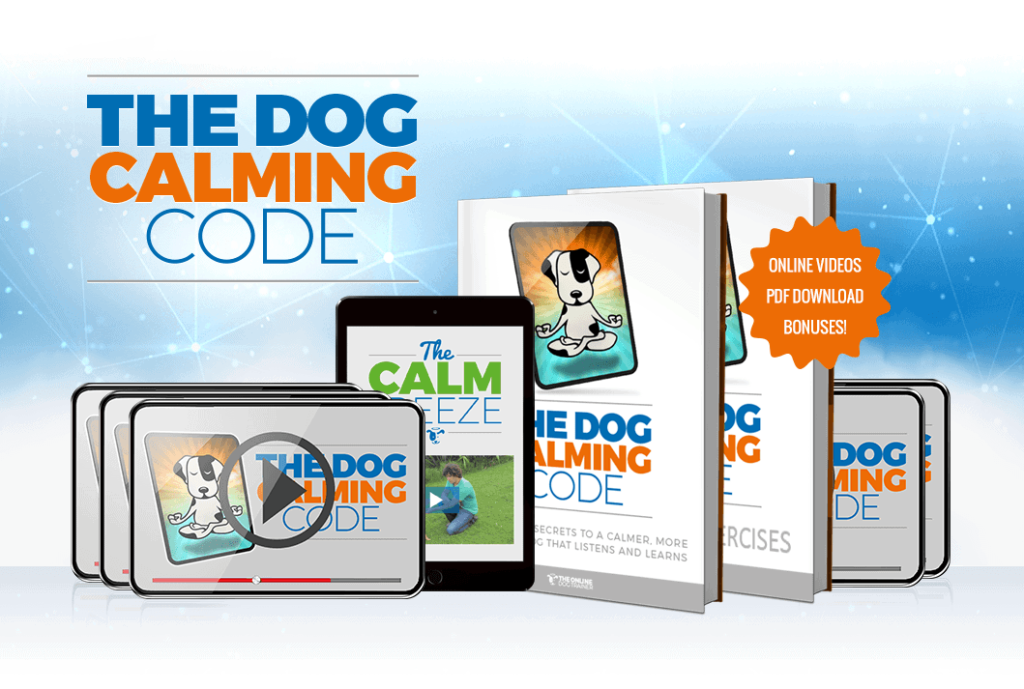
Dog Training for Separation Anxiety: The Dog Calming Code
One thing I like about Doggy Dan’s approach is that he focuses on helping dogs become calmer and more emotionally balanced rather than simply trying to stop unwanted behaviors.
The Dog Calming Code teaches dog owners how to communicate with their dogs in a way that feels natural and understandable to them. The goal is to create a calmer relationship where your dog feels more secure, less anxious, and less dependent on constant reassurance.
Many dog owners find that when their dog’s overall anxiety level decreases, behaviors associated with separation anxiety often improve as well.
How The Dog Calming Code Helps Dogs with Separation Anxiety
While every dog is different, many owners report improvements in several areas after implementing the principles taught in The Dog Calming Code.
- Promotes calm behavior. Dogs often become less reactive and less emotionally overwhelmed by everyday situations.
- Builds confidence. Confident dogs are often more comfortable spending time alone.
- Improves communication. Understanding how dogs naturally communicate can reduce confusion and frustration for both the dog and the owner.
- Reduces over-dependence. Many anxious dogs benefit from learning that they can relax even when their owner is not nearby.
- Addresses the emotional cause of the behavior. Instead of focusing only on symptoms, the program focuses on helping dogs feel safer and more secure overall.

Additional Help for Dogs with Separation Anxiety
Separation anxiety often requires patience and consistency. In addition to effective training, it can help to also gradually teach your dog that being alone is safe and temporary.
You may also find these articles helpful:
- Treating Dog Separation Anxiety: Tips to Help Your Dog Stay Home Alone
- How to Boost Your Dog’s Confidence: 8 Super Effective Ways
- Puppy Separation Anxiety (for owners of younger dogs and puppies)
- ASPCA: Dog Separation Anxiety
Final Thoughts On Dog Training for Separation Anxiety
Living with a dog who struggles with separation anxiety can be emotionally draining for both you and your dog. I had a Miniature Dachshund several years ago who developed separation anxiety when she got older. It broke my heart.
The good news is that many dogs improve significantly when their emotional needs are addressed and they learn to feel more confident and secure.
If you’re currently dealing with separation anxiety in your dog, don’t lose hope. With patience, consistency, and the right approach, your dog can become significantly calmer and more comfortable being left alone.
I Donate to Animal Charities
Thank you for visiting my website. I donate 10% of my profits to animal charities. You can see a list of the charities I donate to here. If you found my site helpful, please share it with your friends and family.
💬 Did this help you? If you have a question, helpful tips, or even a struggle related to this topic, please leave a comment below — it helps other readers more than you know.
For More About Dog Training, CLICK HERE
Pin It For Later!