If you’re finding urine around your home and aren’t sure whether your cat is spraying or simply urinating outside the litter box, you’re not alone. Cat spraying and cat urination are two different behaviors with different causes and solutions. Understanding the difference is the first step toward solving the problem and restoring harmony in your home.
In this post, you’ll learn the key differences between cat spraying and cat urinating, why cats engage in each behavior, how to identify which one you’re dealing with, and what you can do to stop unwanted marking. You’ll also find links to additional resources that can help you better understand your cat’s behavior.
Affiliate disclosure: This post contains affiliate links. If you make a purchase, I will earn a commission at no extra cost to you. I donate 10% of my profits to animal charities.
👉 Need a Fast Solution for Cat Spraying?
Watch My Video: What’s the Difference Between Cat Spraying & Cat Urinating?
How Can You Tell if Your Cat Is Spraying or Urinating?
One of the easiest ways to tell the difference is by looking at your cat’s body position and where the urine is being deposited.
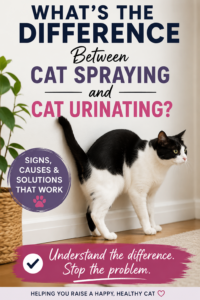
When a cat sprays, they typically back up to a vertical surface such as a wall, door, furniture leg, or curtain. Their tail is often raised and may quiver while they release a small amount of urine. The goal is usually to leave a scent marker rather than empty their bladder.
When a cat urinates, they usually squat on a horizontal surface and release a larger amount of urine. This behavior is often associated with normal elimination, litter box issues, stress, medical problems, or environmental changes.
One other difference: In my experience, cat spraying, especially if it’s a male cat, is way stinkier than cat urine!
Common signs of spraying include:
- Urine found on walls, doors, furniture, or curtains
- Small amounts of urine
- Tail quivering during the behavior
- Repeated marking in the same locations
Common signs of inappropriate urination include:
- Large puddles of urine on floors, beds, or rugs
- Squatting posture
- Avoidance of the litter box
- Possible medical or litter box-related causes
Why Do Cats Spray Instead of Using the Litter Box?
Spraying is usually a form of communication rather than a bathroom habit. Cats have scent glands and use urine marking to communicate with other cats. Even indoor cats may spray when they feel stressed, threatened, anxious, or territorial.
Common reasons cats spray include:
- Territorial disputes with other cats
- Outdoor cats visible through windows
- Changes in the household
- New pets or family members
- Stress and anxiety
- Mating-related behaviors in unneutered or unspayed cats
According to the VCA Animal Hospitals, urine marking is a normal feline communication behavior that can occur in both male and female cats.
Because spraying is often linked to emotions and territory, simply cleaning the area may not solve the problem. The underlying trigger usually needs to be addressed.
For more understanding about why your cat isn’t using the litter box, read my post, How to Get Your Cat to Use the Litter Box (and why they won’t). That post also includes a video.
How Do You Stop a Cat from Spraying in the House?
The best solution depends on what’s causing the spraying behavior in the first place.
If your cat is spraying due to stress, territorial concerns, or environmental changes, behavior modification techniques can often help reduce or eliminate the problem. Identifying triggers, managing stress, and making strategic changes around the home are important steps.
One resource many cat owners have found helpful is Cat Spray Stop. The program focuses specifically on helping owners understand why cats spray and provides practical strategies for stopping the behavior.
You may also find my article on How to Stop a Cat from Spraying helpful, as it covers additional causes, prevention strategies, and solutions.
👉 If you’re tired of finding spray marks around your home, check out my review of Cat Spray Stop to see how the program works and whether it may be a good fit for your situation.
Frequently Asked Questions About Cat Spraying and Cat Urinating
Do male cats spray more than female cats? Yes. Unneutered male cats are the most likely to spray, but female cats and neutered males can spray as well.
Does spraying smell different than urinating? Many cat owners notice that sprayed urine has a stronger, more pungent odor because it contains additional scent-marking chemicals.
Should I take my cat to the veterinarian? Yes. If your cat suddenly begins urinating outside the litter box or changes bathroom habits, a veterinary exam is recommended to rule out medical causes.

What Is the Difference Between Cat Spraying and Cat Urinating? Key Takeaways
Cat spraying and cat urinating are not the same behavior. Spraying is usually a form of communication and territory marking, while urinating is primarily related to elimination. Understanding which behavior you’re dealing with can help you choose the most effective solution.
If your cat is spraying, don’t assume they’re being stubborn or spiteful. In many cases, they’re responding to stress, anxiety, territorial concerns, or other environmental triggers. Learning the reason behind the behavior is often the key to stopping it successfully. Be sure to read my post, How to Stop a Cat from Spraying to get a full understanding of what spraying is and why cats spray.
As a cat lover myself, I know how frustrating and discouraging spraying problems can be. Fortunately, my current male cat, Whiskers, has never developed a persistent spraying problem.
The good news is that many cats improve significantly once the underlying cause is identified and addressed.
For a broader look at why cats behave the way they do, see my guide to Common Cat Behaviors Explained.
Pin it for Later!