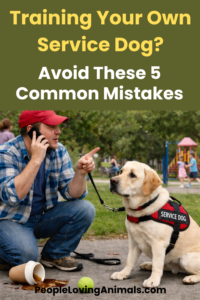
Training your own service dog can be incredibly rewarding—but it also comes with challenges that many first-time dog owners don’t expect. Small training mistakes can lead to unreliable behavior, slow progress, or even serious setbacks in real-world situations.
In this post, you’ll learn the most common service dog training mistakes and how to avoid them so you can train a confident, reliable, and well-prepared service dog who can perform consistently in real-world situations.
 Want step-by-step help training your service dog? Click here to enroll in a structured service dog training program
Affiliate disclosure: This post contains affiliate links. If you make a purchase, I will earn a commission at no extra cost to you. I donate 10% of my profits to animal charities.
5 Common Service Dog Training Mistakes
Many people start service dog training with the best intentions, but small mistakes can slow progress or create reliability problems later. Understanding these common pitfalls early can help you build strong habits, avoid frustration, and develop a confident, dependable service dog that can perform consistently in real-world situations.
According to ServiceDogTrainingSchool.org, these are 5 of the most common mistakes dog owners make when training their own service dog.
1. Impatience and Unrealistic Expectations
One of the biggest mistakes in service dog training is expecting progress to happen quickly. Many dog owners assume that once a dog learns a cue at home, it should work everywhere. In reality, dogs need gradual exposure to distractions, increased distance, and new environments before a behavior becomes reliable.
Moving too fast can create confusion and frustration for both you and your dog. Instead, focus on building a strong foundation in low-distraction settings. Increase difficulty slowly and change only one variable at a time. Short, frequent sessions woven into daily routines often lead to better long-term success.
2. Failure to Practice Behaviors in Real-World Settings
Teaching a behavior in your living room does not mean your dog will perform it reliably in public. Dogs do not automatically generalize skills across environments. This is especially important for service dogs, who often must work in crowded, noisy, and unpredictable situations.
To prevent problems, practice behaviors in different locations and gradually add distractions. Consistent maintenance training helps keep skills sharp and ensures your dog remains dependable when it matters most.
3. Inconsistent Timing, Cues, and Expectations
Dogs learn through clear communication and consistency. When rewards come too late, or cues change from person to person, the dog may not understand what is expected. Repeating commands multiple times can also teach the dog to ignore the first cue.
Use simple, consistent cue words and reward immediately when your dog responds correctly. Everyone in your household should follow the same training approach. Monitoring your dog’s responses and maintaining consistency across training sessions will improve clarity and reliability over time.
4. Overreliance on Treats and Lures
Treats are valuable in the early stages of training, but relying on visible food rewards can create weak behaviors. If your dog only performs when treats are present, reliability will suffer in real-world situations.
The goal is to gradually fade food rewards and introduce praise, play, and other reinforcers. Intermittent rewards help strengthen behavior and encourage your dog to respond even when food is not available.
5. Using Punishment or Harsh Corrections
Forceful or punitive training methods can damage trust and increase fear or reactivity. For service dogs who must remain calm and confident in stressful situations, this can be especially harmful.
Positive, reward-based training strengthens the bond between you and your dog and leads to more reliable results. If progress stalls, it’s better to adjust your training plan, change rewards, or seek professional guidance rather than use physical corrections.

Remember, Even Well-Trained Service Dogs Have Off Days
Even well-trained service dogs are still living animals. They may have off days, make mistakes, or react to unexpected situations. Staying calm and prepared allows you to handle challenges without undermining your dog’s confidence.
Remember, most dogs genuinely want to please their owner, whether it’s in service dog training or in any other aspect of life. Don’t get mad if they make mistakes. It’s your job to teach them in a way they can understand.
Ongoing practice, patience, and realistic expectations help build a strong partnership that will support you for years to come.
For more information on what training your dog as a service dog entails, read my post, How to Train Your Own Service Dog Legally.

Top Service Dog Training School
If you’d like expert training on exactly how to train your own dog as a service dog, I can recommend a great program at Service Dog Training School International. They’ll guide you step-by-step using the best practices and the most effective training techniques. You and your dog will enjoy the program, and the extra help!
Need expert guidance and a proven training plan? Check out my top recommended service dog training course here
More Information About Service Dog Training
- How to Train Your Own Service Dog Legally
- Difference Between a Service Dog and an Emotional Support Animal
- Training Your Dog as a Service Dog: 5 Common Mistakes
💬 Did this help you? If you have a question, helpful tips, or even a struggle related to this topic, please leave a comment below — it helps other readers more than you know.
Pin it for Later!