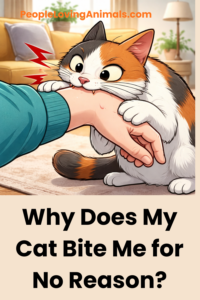

If your cat bites you for no reason, it can feel confusing, upsetting, and even a little personal. But in reality, cats almost never bite without a reason. The issue is that their communication is subtle, and humans often miss the early signals. What feels random is usually the result of small triggers building up over time.
In this post, we’ll explore why cat biting can seem random, the hidden triggers most owners miss, how subtle body language plays a role, and what your cat may be trying to communicate when this behavior happens. You’ll also learn how understanding these patterns can help you prevent future biting and strengthen your bond with your cat.
👉 Want a better-behaved cat? See why I recommend The Complete Cat Training Guide.
Affiliate disclosure: This post contains affiliate links. If you make a purchase, I will earn a commission at no extra cost to you. As an Amazon associate, I earn from qualifying purchases. I donate 10% of my profits to animal charities.

Why Does My Cat Bite Me for No Reason?
When people say their cat bites “for no reason,” what they usually mean is that they didn’t see anything happen right before the bite. But cats don’t react only to the moment. They often react to a build-up of stress, stimulation, or frustration that started earlier.
Cats communicate in subtle ways long before they bite. They may freeze, stare, flick their tail, turn or flatten their ears, or become tense. If these quiet signals are missed, the bite becomes their final and most effective form of communication.
In other words, the bite isn’t random. It’s the point where your cat feels they are no longer being heard.
Watch My Video: Why Does My Cat Bite Me for No Reason?
Hidden Triggers Most Cat Owners Miss
Many of the reasons behind “random” biting happen outside of your awareness. For example, simple things like eye contact, scent changes, or routine disruption can create stress for sensitive cats.
Direct staring can feel threatening in cat communication. A new perfume, laundry detergent, or even the smell of another animal on your clothes can trigger anxiety. Changes in daily routine—such as different feeding times, visitors, or altered work schedules—can also increase tension.
Overstimulation is another hidden cause. Your cat may seem calm, but their nervous system may already be overloaded from noise, activity, or environmental changes. When that stress builds, even a small interaction can push them past their threshold.
Because these triggers often occur minutes or hours before the bite, it’s easy to assume the behavior came “out of nowhere.”
Start paying attention to patterns such as time of day, environment, and your cat’s body language, because these clues often reveal the real cause.
To learn more about things that might upset your cat, read my post, Cat Stress Relievers: 10 Things That Stress Out Your Cat! (includes video).
According to Cats Protection, many cats bite due to overstimulation, redirected hunting instincts, or stress that owners may not immediately notice.
Environmental Stress and Frustration
Indoor cats, in particular, can develop frustration if their hunting instincts are not met. Cats are wired to stalk, chase, and capture prey. Without daily outlets for this natural behavior, their energy and tension can build.
This frustration often looks like sudden biting. Your cat may attack your hands, feet, or legs, especially when you move. From your perspective, it feels random. From your cat’s perspective, it’s an attempt to release pent-up hunting drive.
Even window activity, such as birds or squirrels, can create excitement without resolution. This unresolved stimulation can lead to redirected behavior toward the nearest target.
Letting your cat watch birds or squirrels is actually great mental stimulation and enrichment. The key is making sure your cat also has daily outlets for their hunting instincts, such as interactive play with wand toys, interactive toys or puzzle feeders, so that excitement does not turn into frustration or biting.
Providing structured daily play and predictable routines can significantly reduce tension and prevent sudden biting.
Attention-Seeking and Learned Behavior
Some cats bite because it works. If biting gets a reaction—talking, movement, eye contact, or interaction—it can become a learned strategy.
This is especially common in intelligent or social cats who want more engagement. Even negative attention can reinforce the habit. Over time, the cat learns that biting is the fastest way to get your attention or initiate interaction.
Because this pattern develops gradually, it often surprises owners when it becomes frequent.
The best approach is to reward calm behavior and avoid reacting to biting, so your cat learns that gentle interaction works better.
Redirected Aggression and Emotional Release
Redirected aggression is one of the most misunderstood causes of biting. Your cat may be reacting to something else entirely, such as another animal outside, a loud sound, or tension in the environment.
Since they cannot reach the source of the stress, they release that energy onto whoever is closest. This is why bites sometimes occur when you are doing nothing at all.
Understanding this can prevent you from taking the behavior personally. The bite is not about you. It is about emotional overload.
Reducing exposure to triggering stimuli and increasing enrichment can help lower emotional buildup over time.
If you feel like your cat is starting to behave aggressively, read my post, Aggressive Cat Behavior (includes video).
Also, if your cat suddenly attacks you while you’re petting them, read my post, Why Do Cats Bite When You’re Petting Them?

Why Cats Bite for No Reason: Summary
Cats rarely bite for no reason. What feels random is usually a combination of subtle communication, hidden stress, frustration, learned behavior, or emotional overload. The key is learning to notice patterns and early warning signs before the bite occurs.
Understanding the cause of biting is the first step. The next step is teaching your cat what to do instead.
If you want a clear, step-by-step plan to understand your cat’s behavior and reduce biting, I recommend this cat training guide eBook. You can read my full review here.

The Fastest Way to Stop Your Cat from Biting You
Before you go, let me give you the quickest way to stop your cat from biting you that works on my cat, Whiskers, every time! When we’re sitting on the couch and I’m petting him, then all of a sudden, “CHOMP!” I just sit there and he keeps my arm in his mouth but doesn’t bite down.
I say softly, “Biting mommy is never the right thing to do…” HA! I’m telling you, it works every time. He lets go. That’s my boy in the picture with his beloved squirrel toy! Debra

For More Information About Cat Biting
To learn more about why cats bite and specific steps you can take to stop it, read my posts, Why do cats bite their owners? (includes video) and How to stop a cat from biting (includes video)
More Help with Cat Biting
- Why do cats bite their owners?
- Why does my cat bite me for no reason?
- Why do cats bite when you pet them?
- How to stop a cat from biting
💬 Did this help you? If you have a question, helpful tips, or even a struggle related to this topic, please leave a comment below — it helps other readers more than you know.
Pin it for Later!